METHOD
A RECURSIVE ANALOG-ORIGIN SYSTEM FOR TEXTILE TESTIMONY AND MATERIAL RESISTANCE
This methodology exists to make artistic practice materially responsible. It transforms hand-drawn work into wearable testimony, direct aid pathways, and living archives that circulate resources while carrying memory forward across generations.
TAOTAM operates as a recursive system- each stage feeding back into the others, generating iterations while preserving foundational authorship. The process begins entirely by hand and returns to hand, with textile production functioning as the material interface between analog creation and public circulation.
This is not proprietary knowledge. this methodology is offered as infrastructure that anyone can use, adapt, or build upon. If you are willing to do the work, to maintain analog integrity, to root your practice in real contexts of resistance or ecological encounter, to route proceeds toward material support, this system is yours to employ.
1. ANALOG ORIGIN
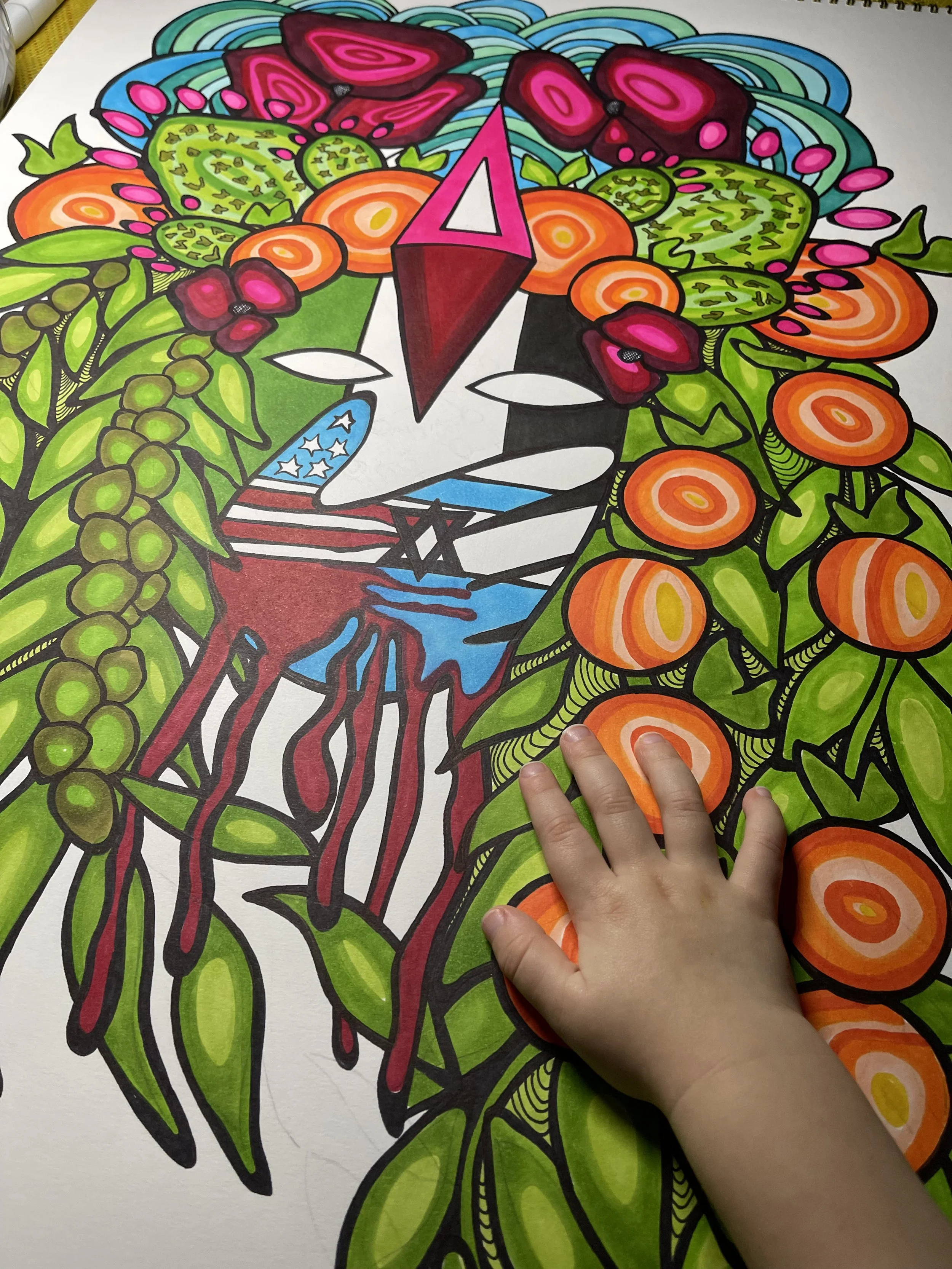
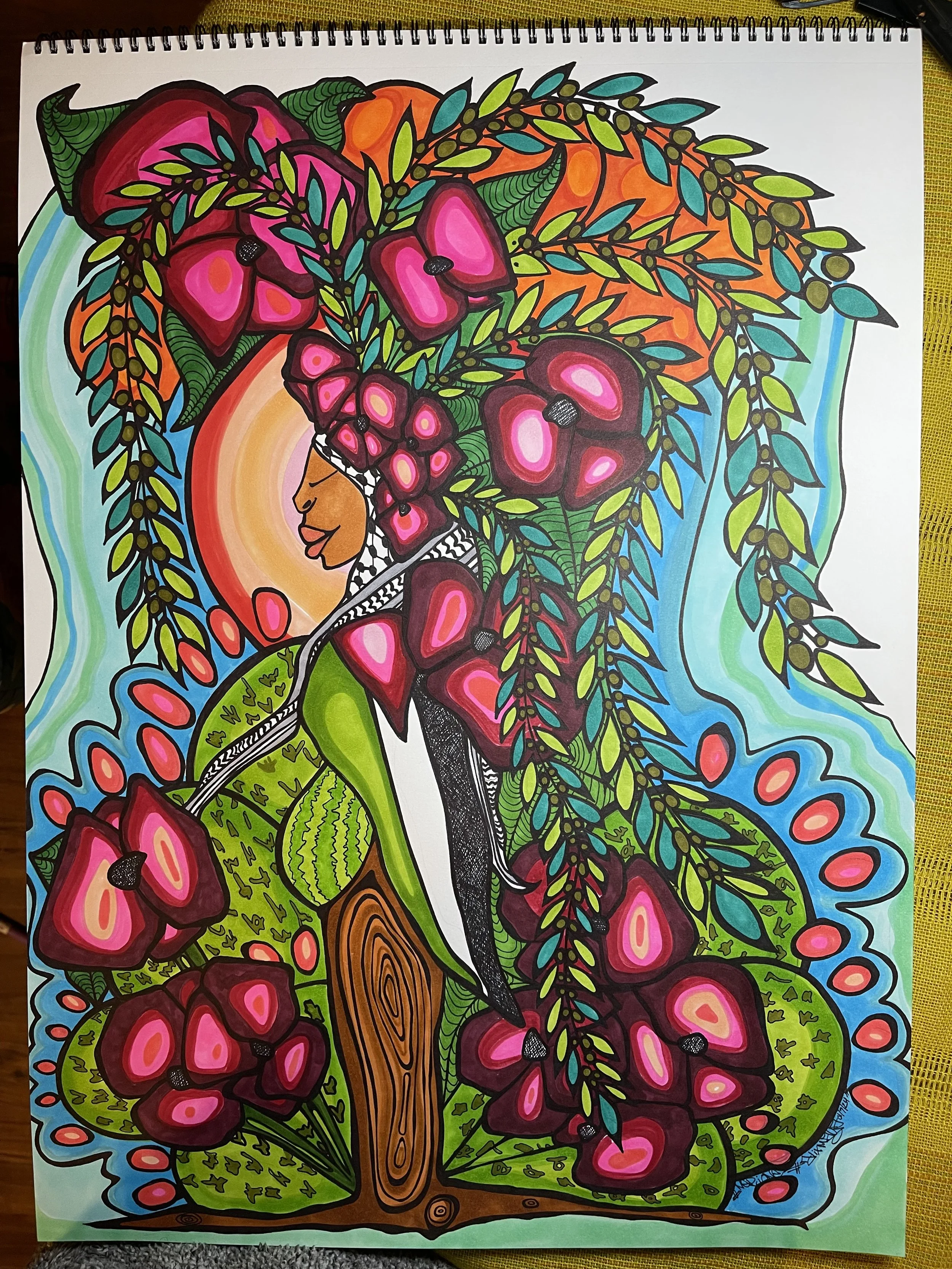
All work begins by hand: drawing, painting, mark-making. The hand carries authorship, gesture, presence. Digital tools may be used later in the process, but the foundational act is analog. The work must bear the trace of your body, your time, your decision making.
2A-Contextual activation
(Counterwear)
For Counterwear, the work is activated through sites of political struggle. This can happen three ways:
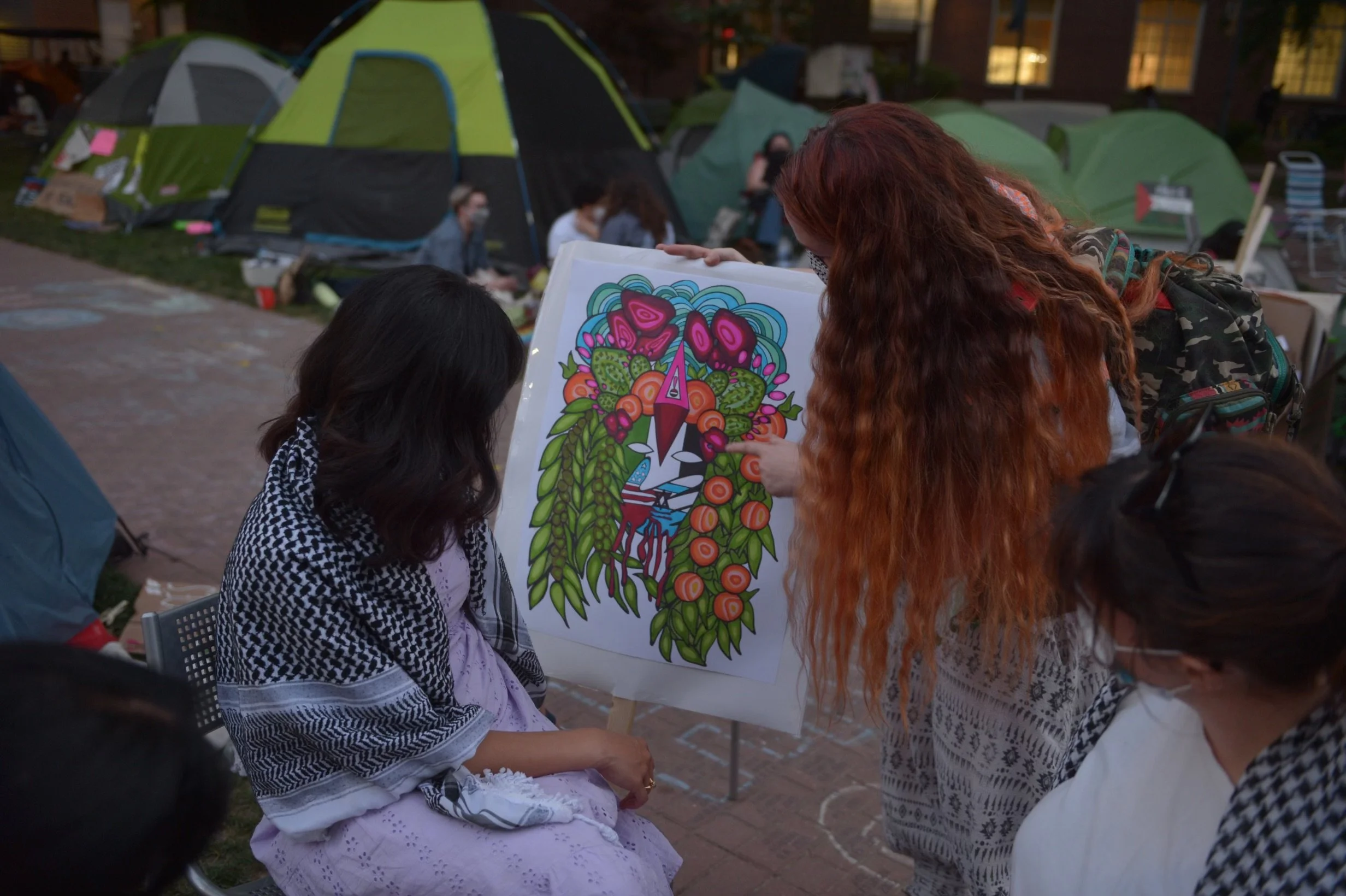
Direct presence - physically bringing drawings to protests and encampments to absorb the energy of resistance spaces.
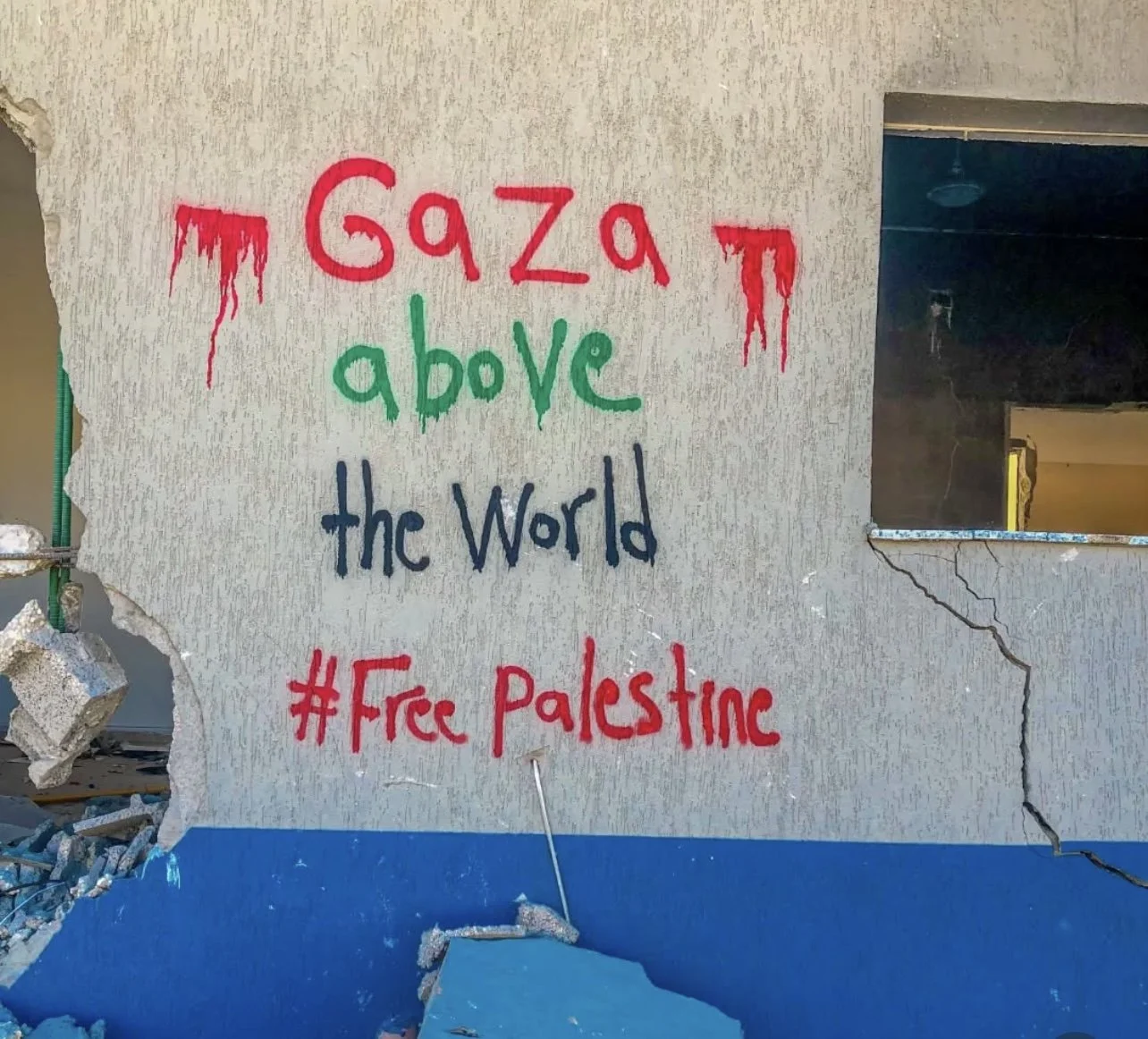
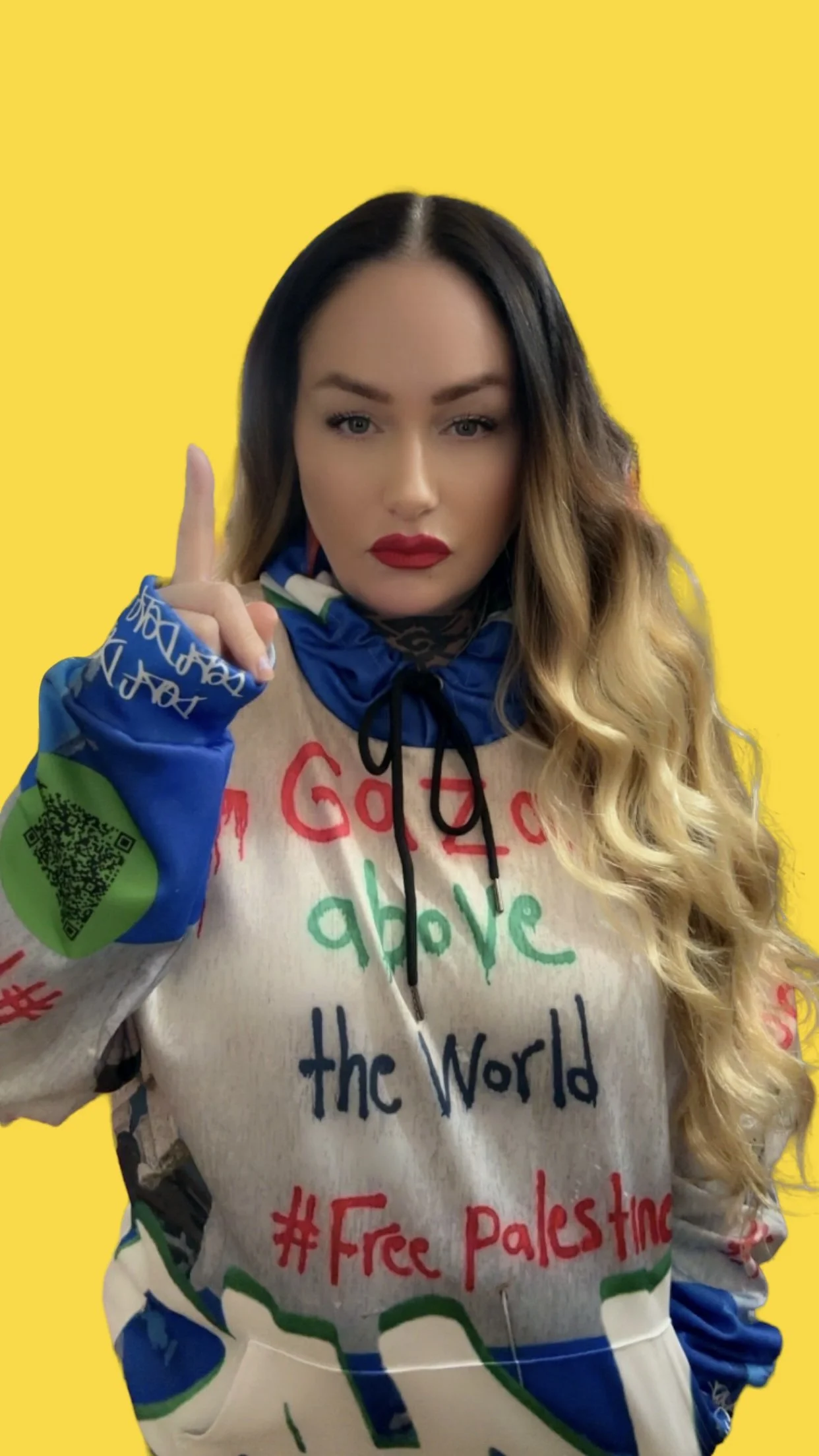
Collaborative testimony - working with existing resistance imagery created in sites of struggle. This image shows graffitti by @mohammed_chico98 in Gaza. “Gaza Above The World", #freepalestine” written on the walls amid rubble. His art, created under genocide, becomes source material for textile translation. The work is already testimony before I touch it.
Archival witness - Photographing protest ephemera (signs, banners, posters) before they are destroyed, then using those photographs as source material.
In all three pathways, the work becomes embedded in resistance. Its is not decoration. It is evidence.
2b. Contextual activation - imaginal naturae/ecology lineage
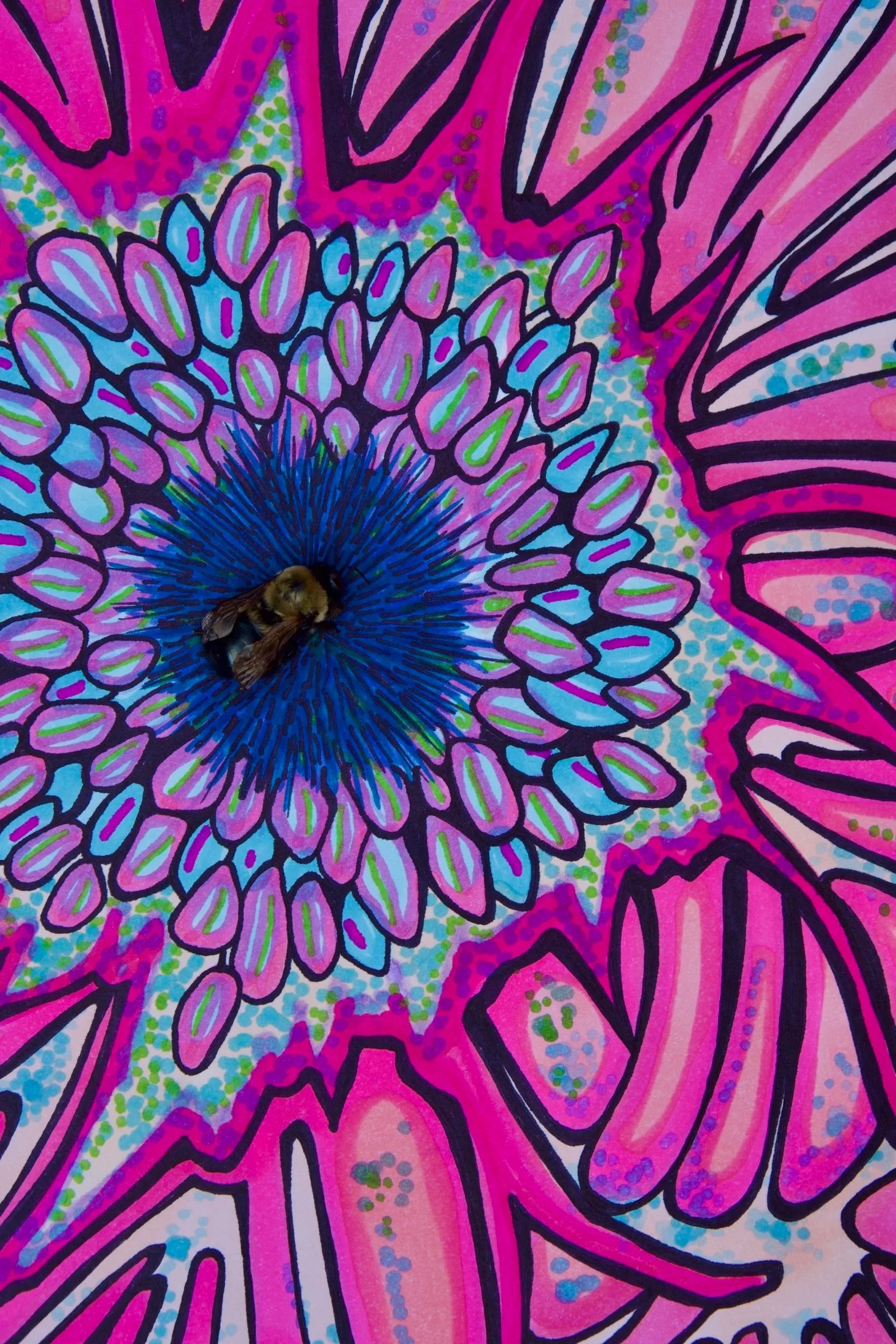
Image: Field documentation - Beenita the carpenter bee, ultraviolet flowers.
For Imaginal Naturae, the work is activated through ecological encounter. The artwork enters the wild: observing carpenter bees, studying ultraviolet flower patterns invisible to human eyes, documenting dream phenomena, engaging with botanical intelligence.
This lineage treats ecology as a form of resistance - a refusal of anthropocentric extraction and a commitment to reciprocal attention with non-human life. The work absorbs environmental knowledge, mythic resonance, and interspecies witnessing.
3. Documentation
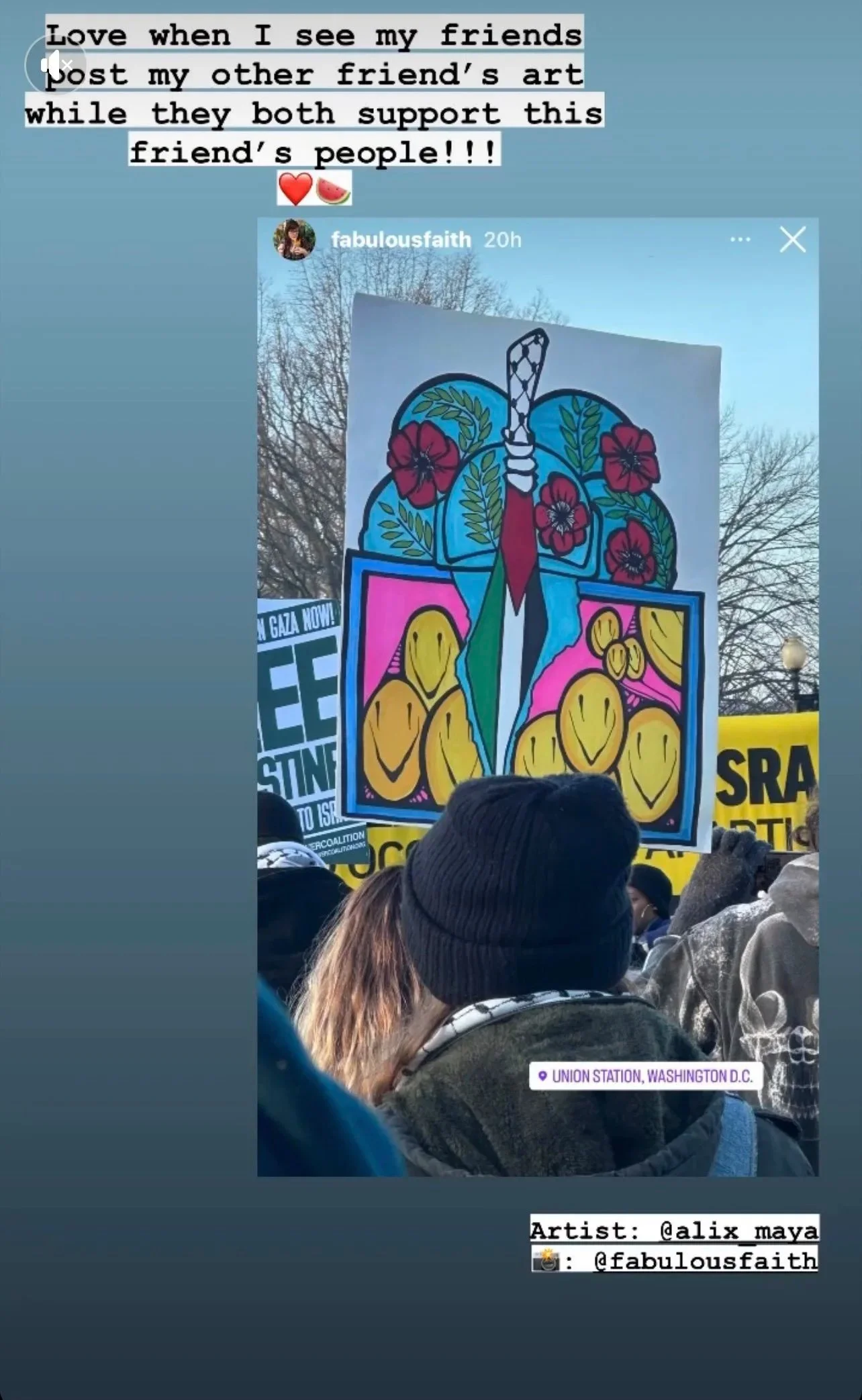
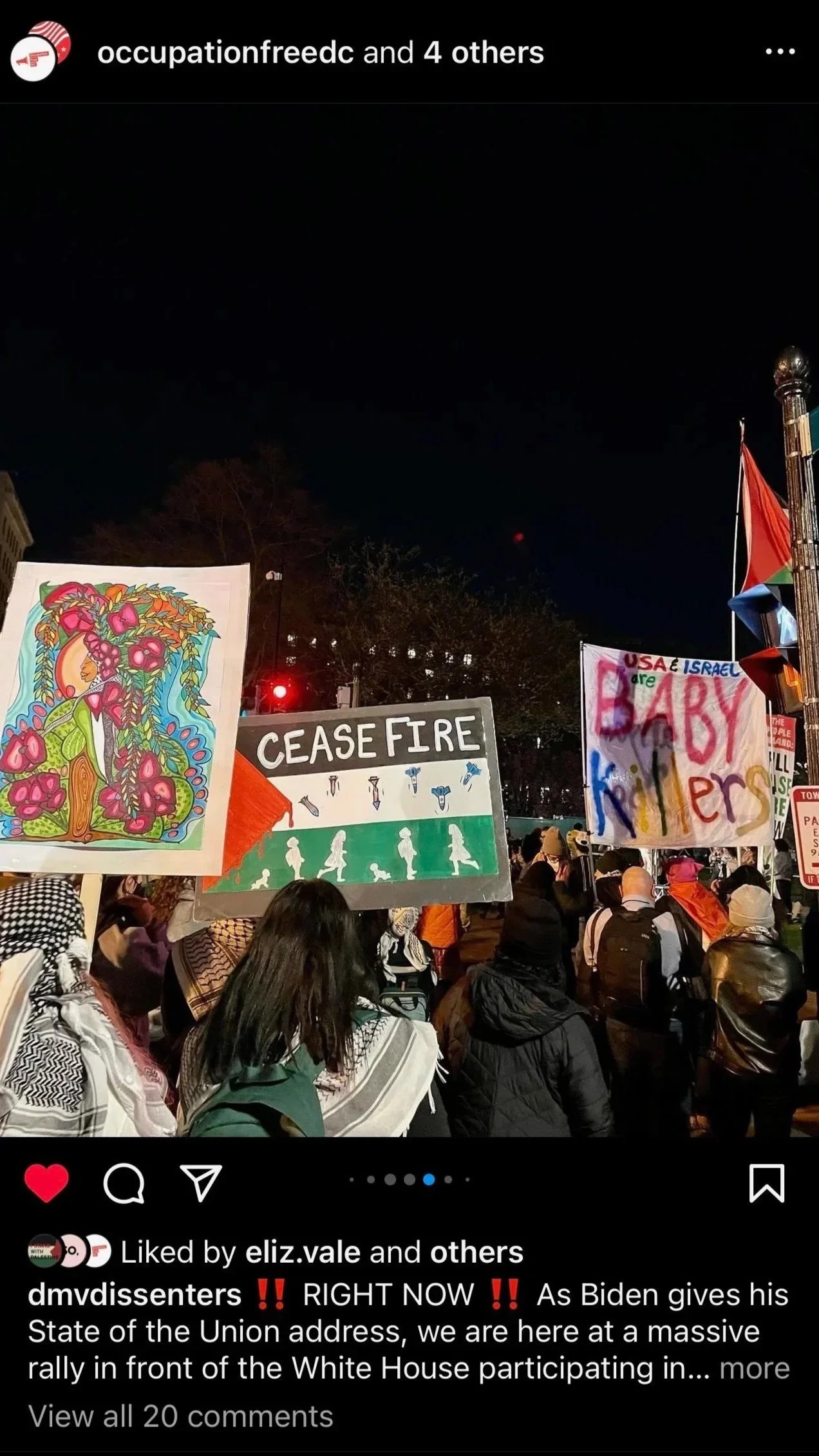
Photography captures the work is its active state. This is not commercial photography. this is evidentiary documentation.
For Counterwear: the artwork present at protest (photographed organically by you or others), source imagery from resistance contexts, or archival records of ephemeral protest materials.
For Imaginal Naturae: field documentation of ecological subjects, process photography, records of environmental encounters.
Important: Documentation of work in protest is not required for the methodology to function. If it happens organically-if others photograph the work because it is present-that documentation becomes part of the archive. But the work does not enter protest spaces in order to be photographed. It enters to participate, to witness, to absorb.
4. Digitization
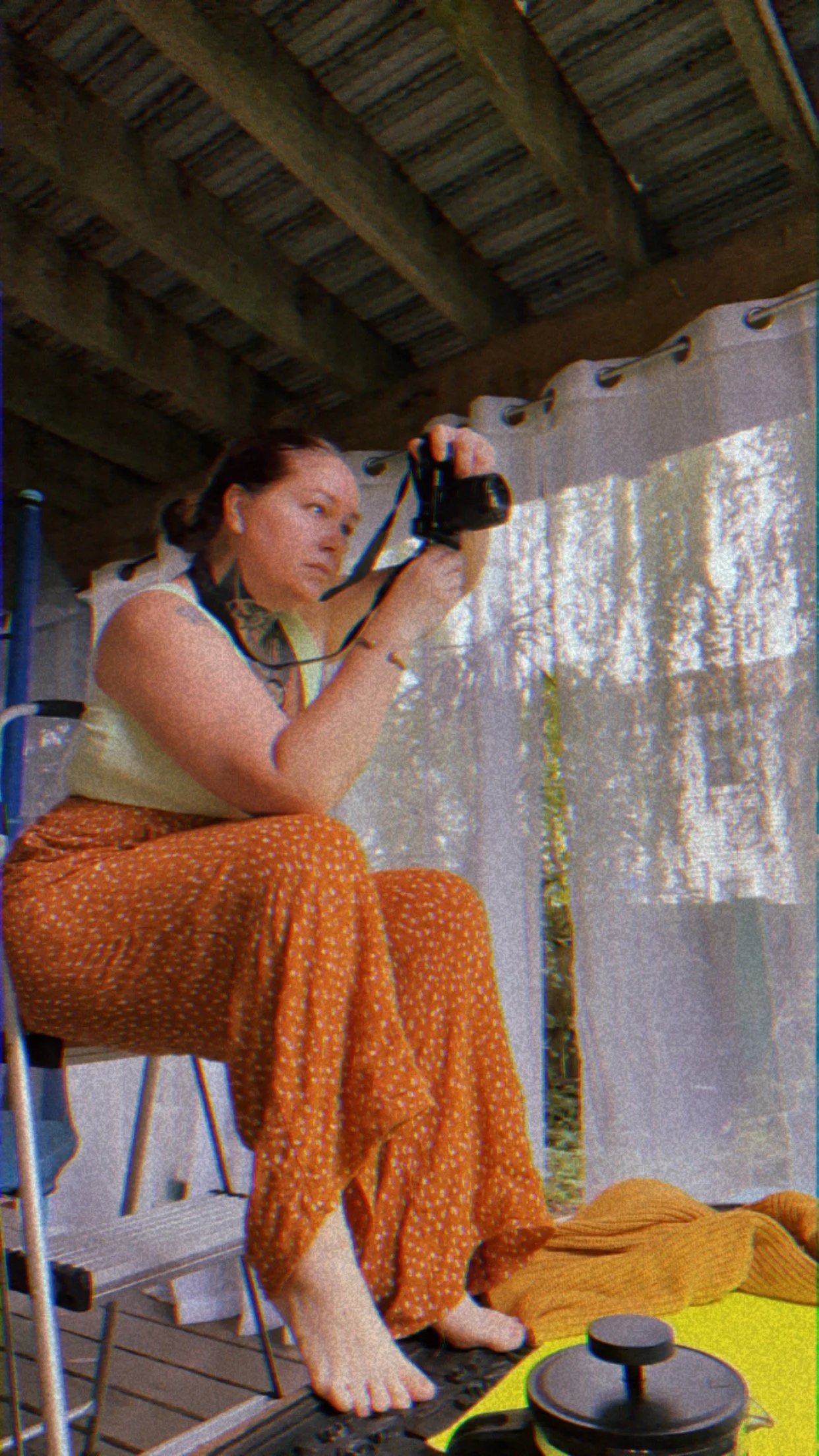
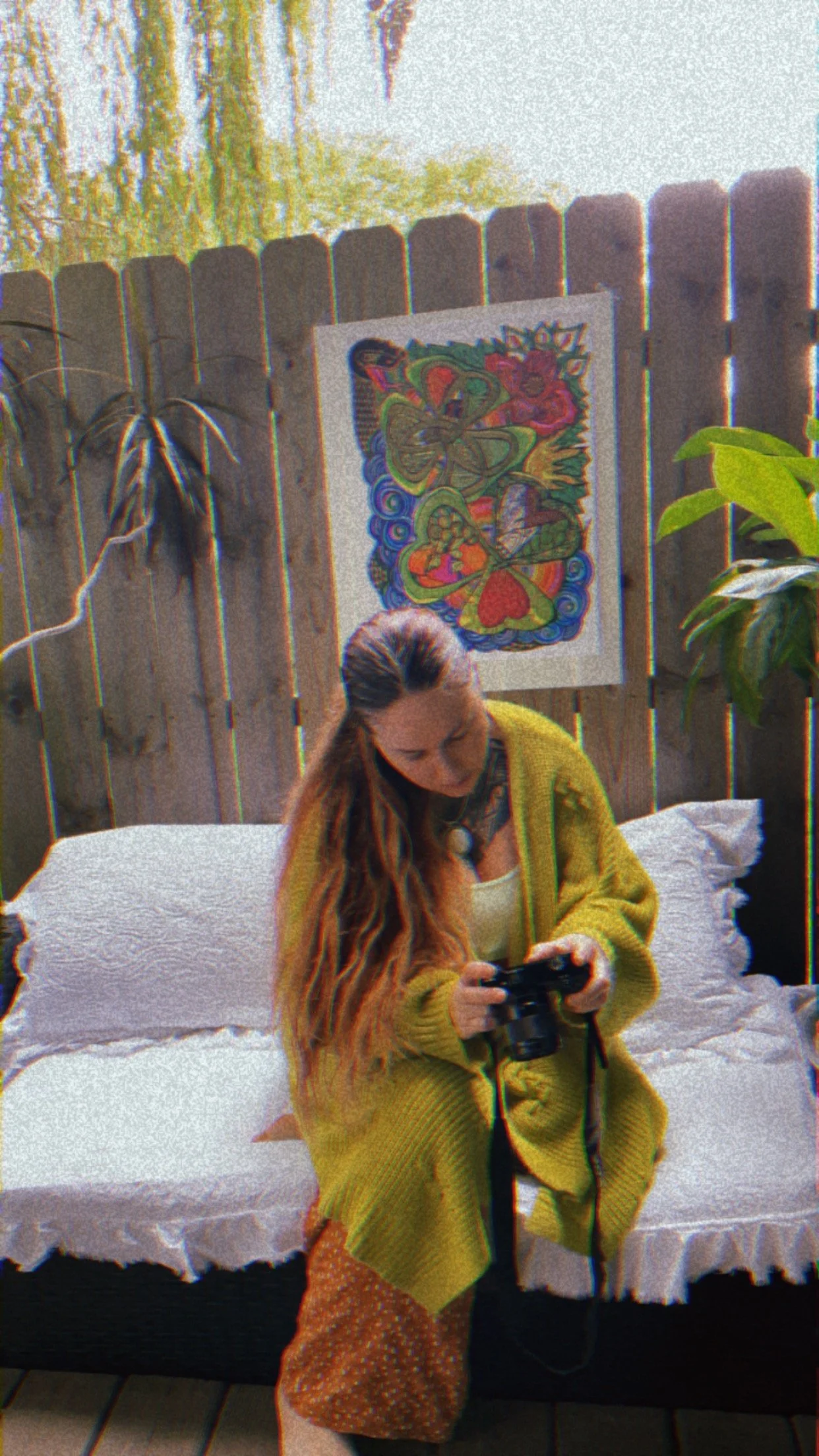
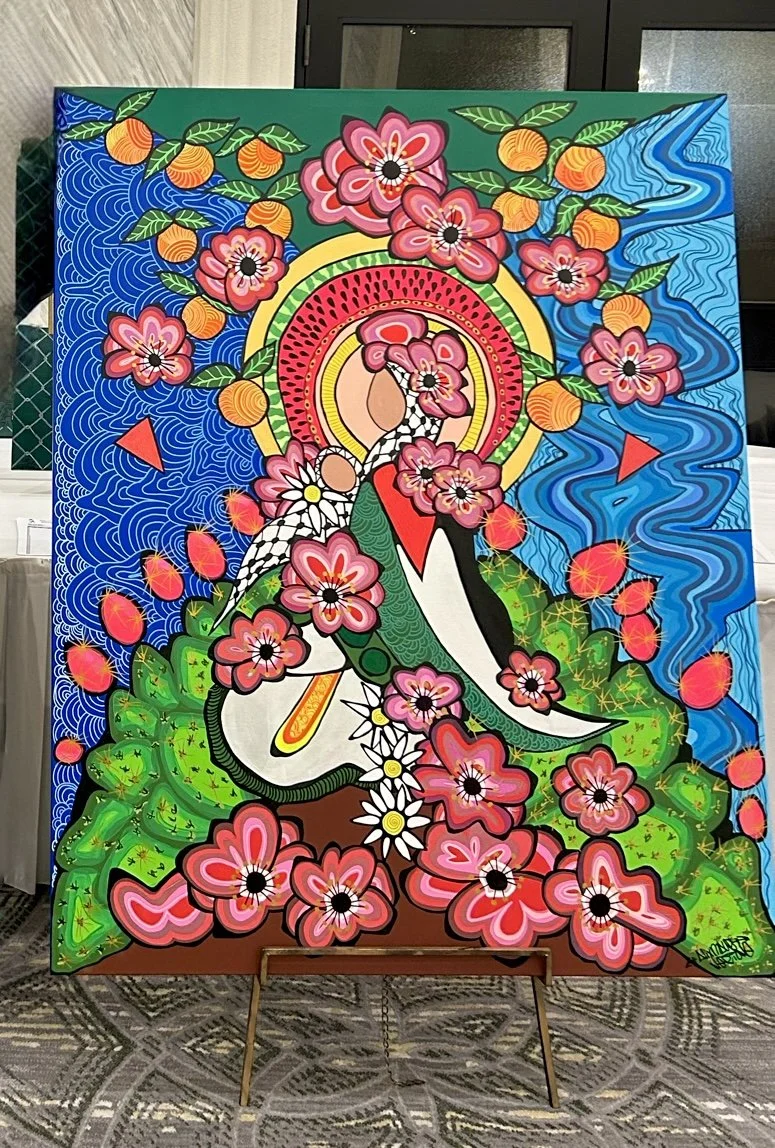
The analog work (or photographic documentation of it) is digitized to prepare for textile translation. this is a technical step, not a vehicle for manufacture, not a replacement for the original. The hand remains the author. The digitization is merely the bridge between your body’s work and its circulation in the world.
5. Textile production
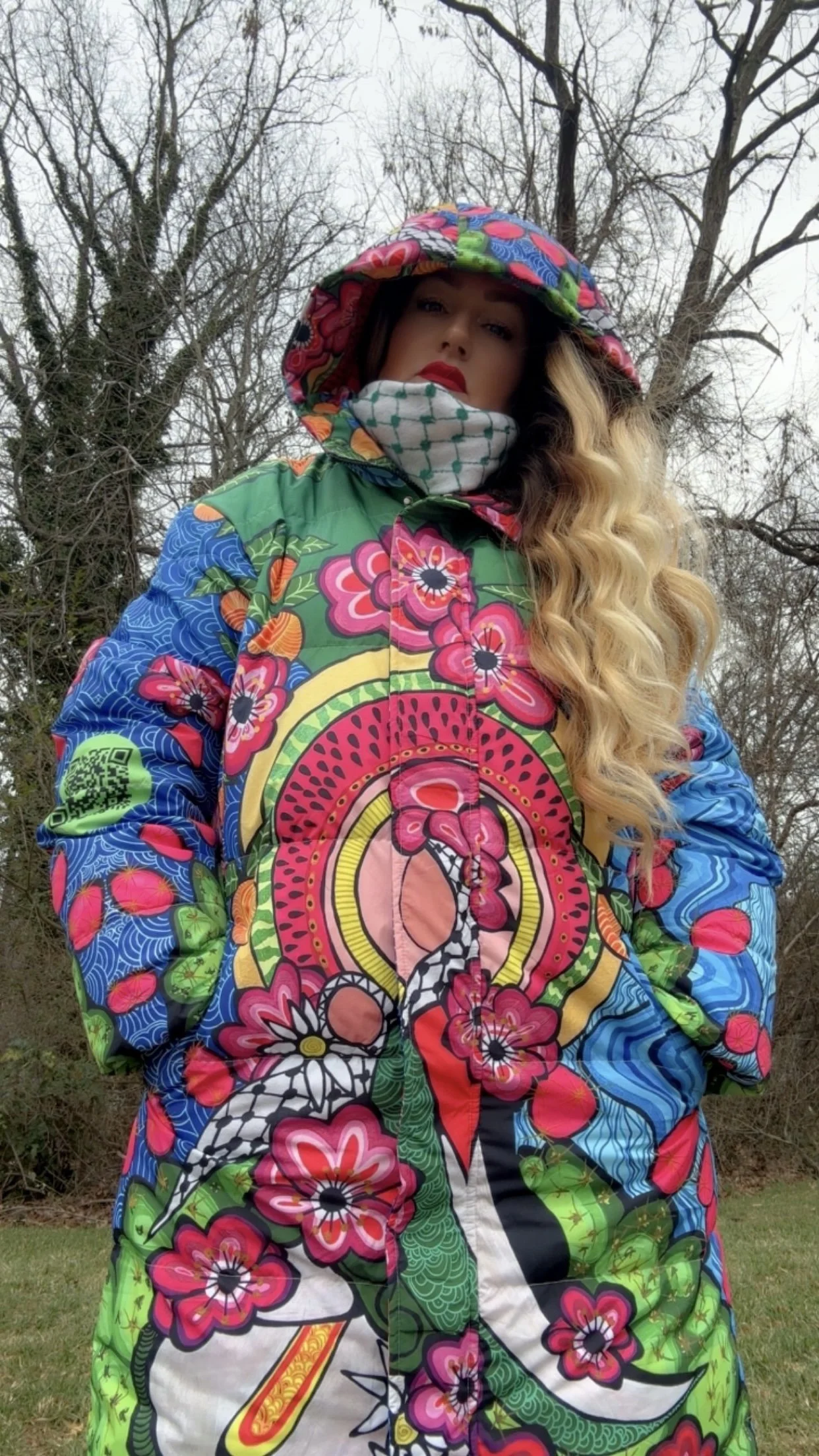
The digitized artwork is translated into wearable for, through print on demand or small-batch textile production.
Transparency matters here.
TAOTAM uses www.yoycol.com as manufacture. This is stated openly because others need to be able to replicate this system, manufacturing processes cannot be mystified, and ethical production requires acknowledging labor and supply chains.
Research for manufacturer. Understand what you use.
Textile production is not extraction. It is translation. You are not outsourcing creativity, you are using industrial infrastructure to scale circulation of work that already exists in full form as analog art.
6. Qr infastructure
(counterwear only)
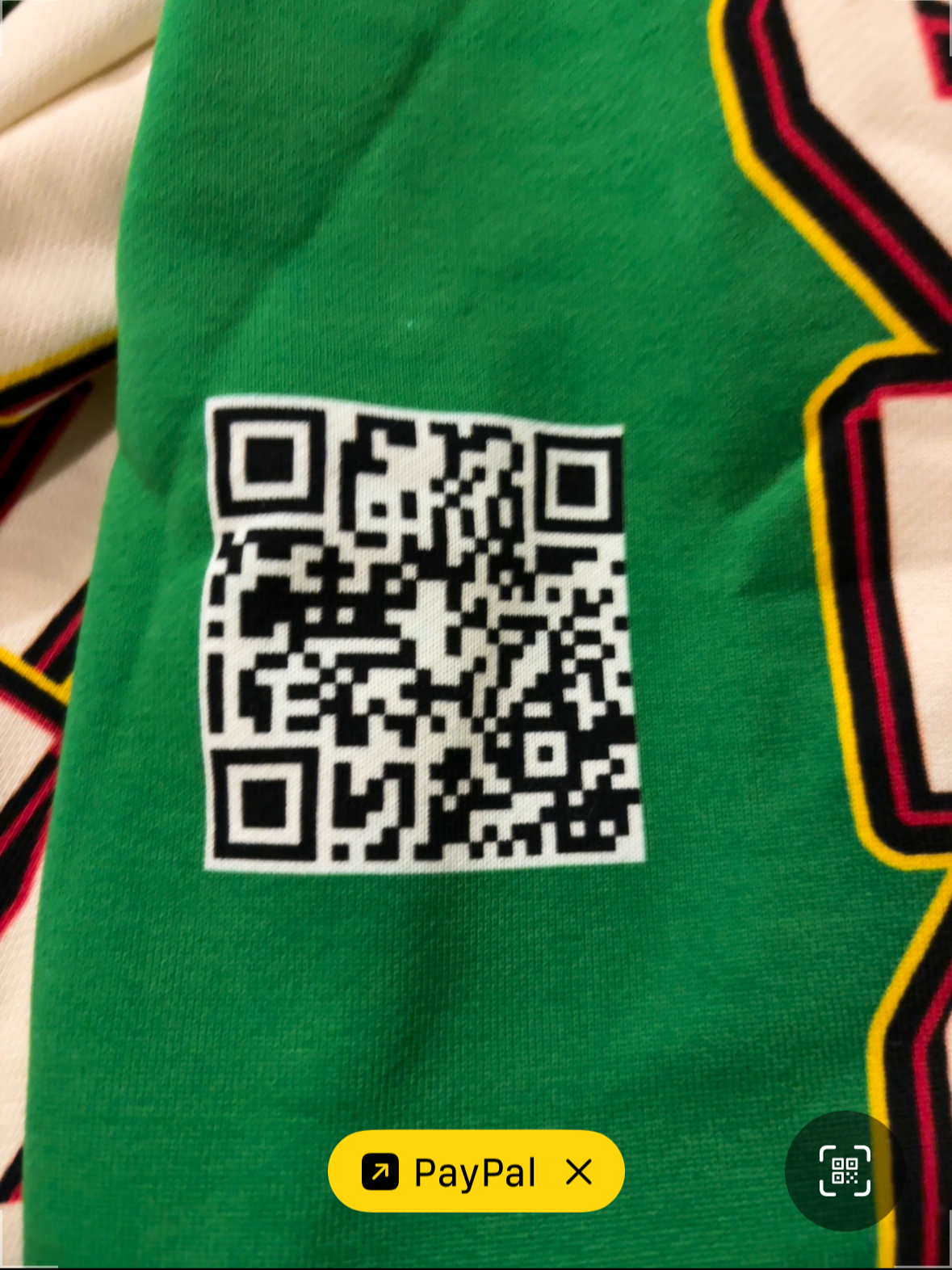
Each Counterwear garment embeds a QR code linking directly to family support systems: verified direct aid channels including payment platforms and medical fundraising services.
Critical: Research payment infrastructure before implementation. Verify that platforms will not block or freeze accounts for the communities you are supporting.
The QR code transforms the garment into an active infrastructure. The wearer becomes a living link, a node in a material support network.
7. Public circulation
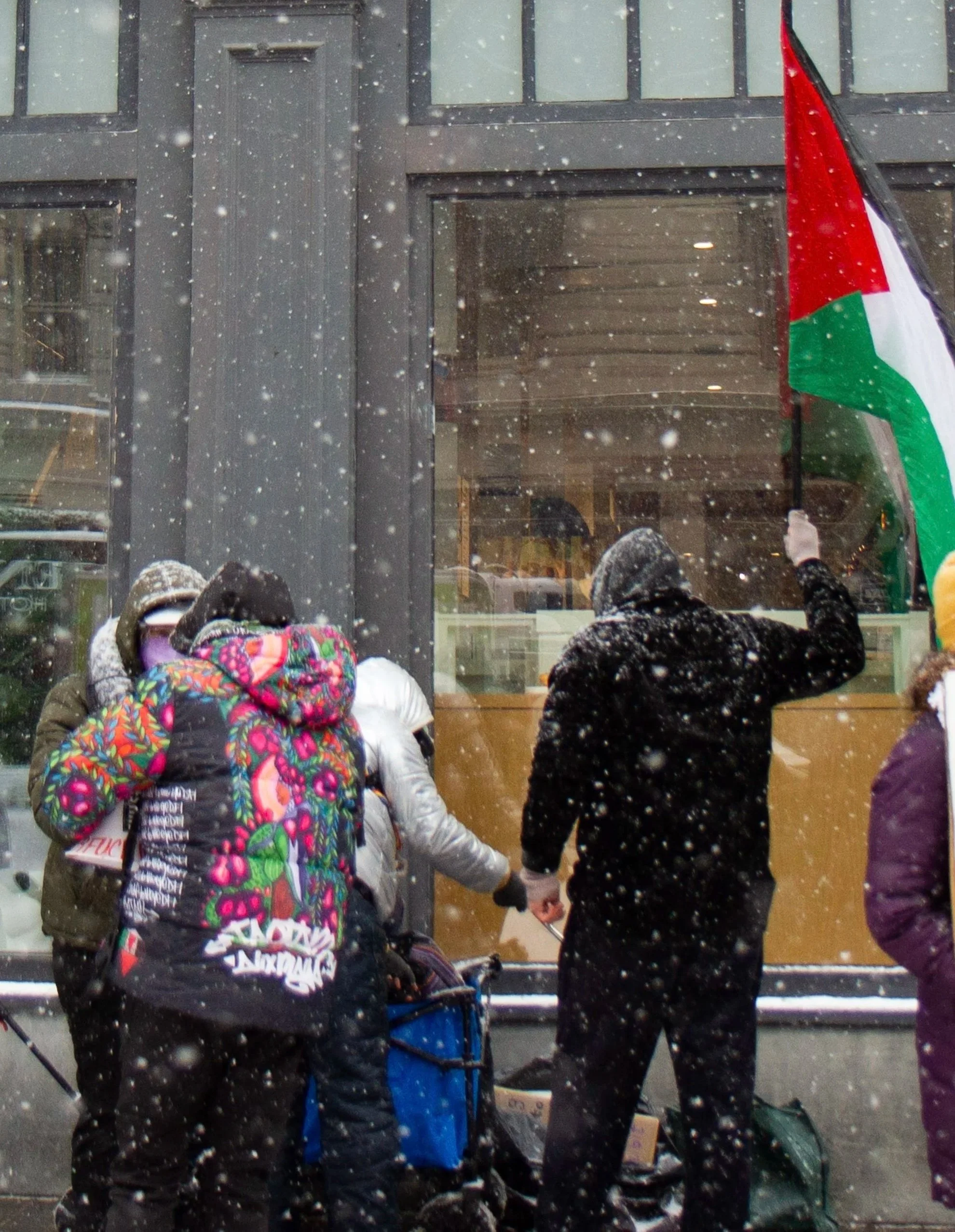
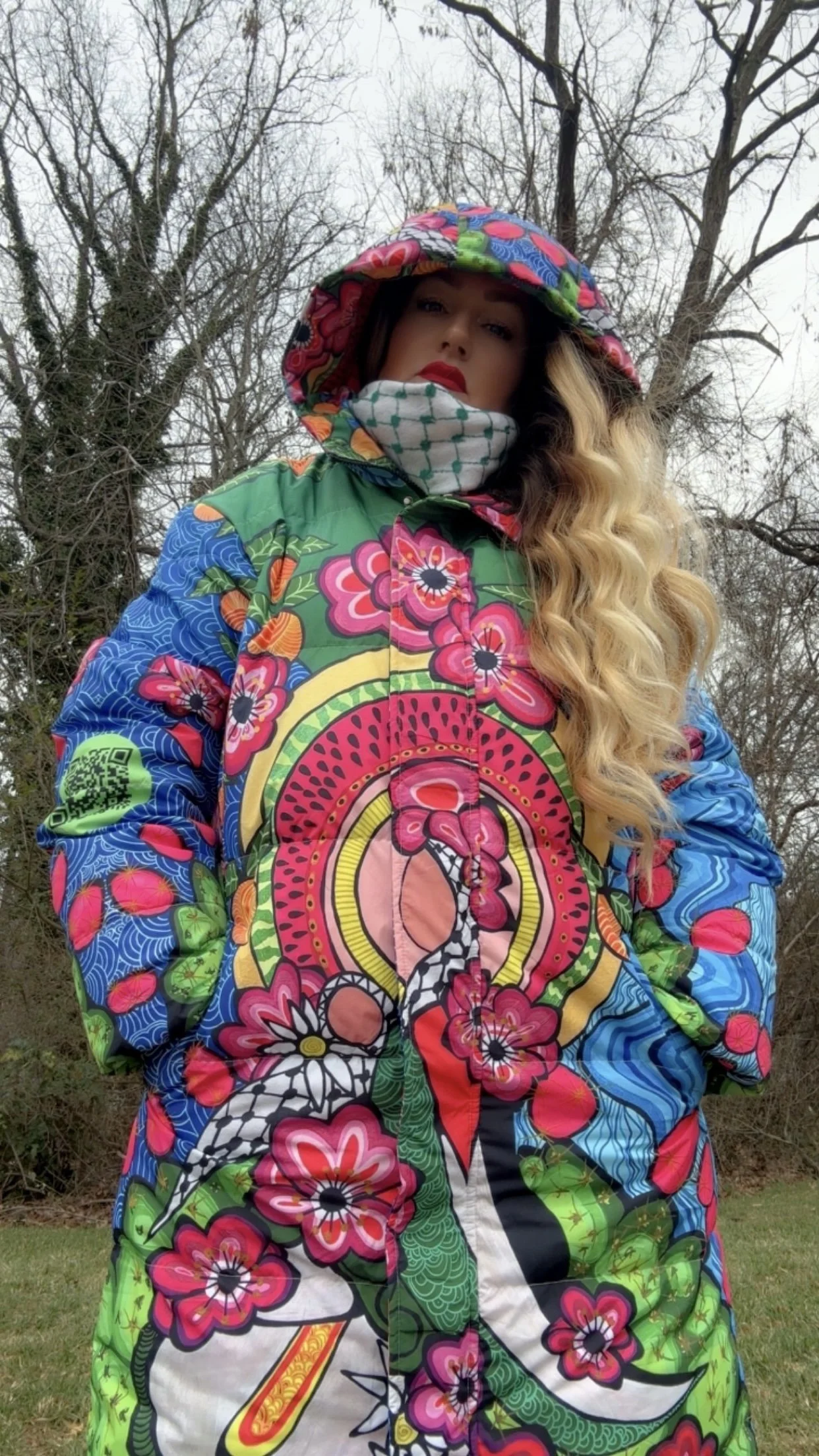
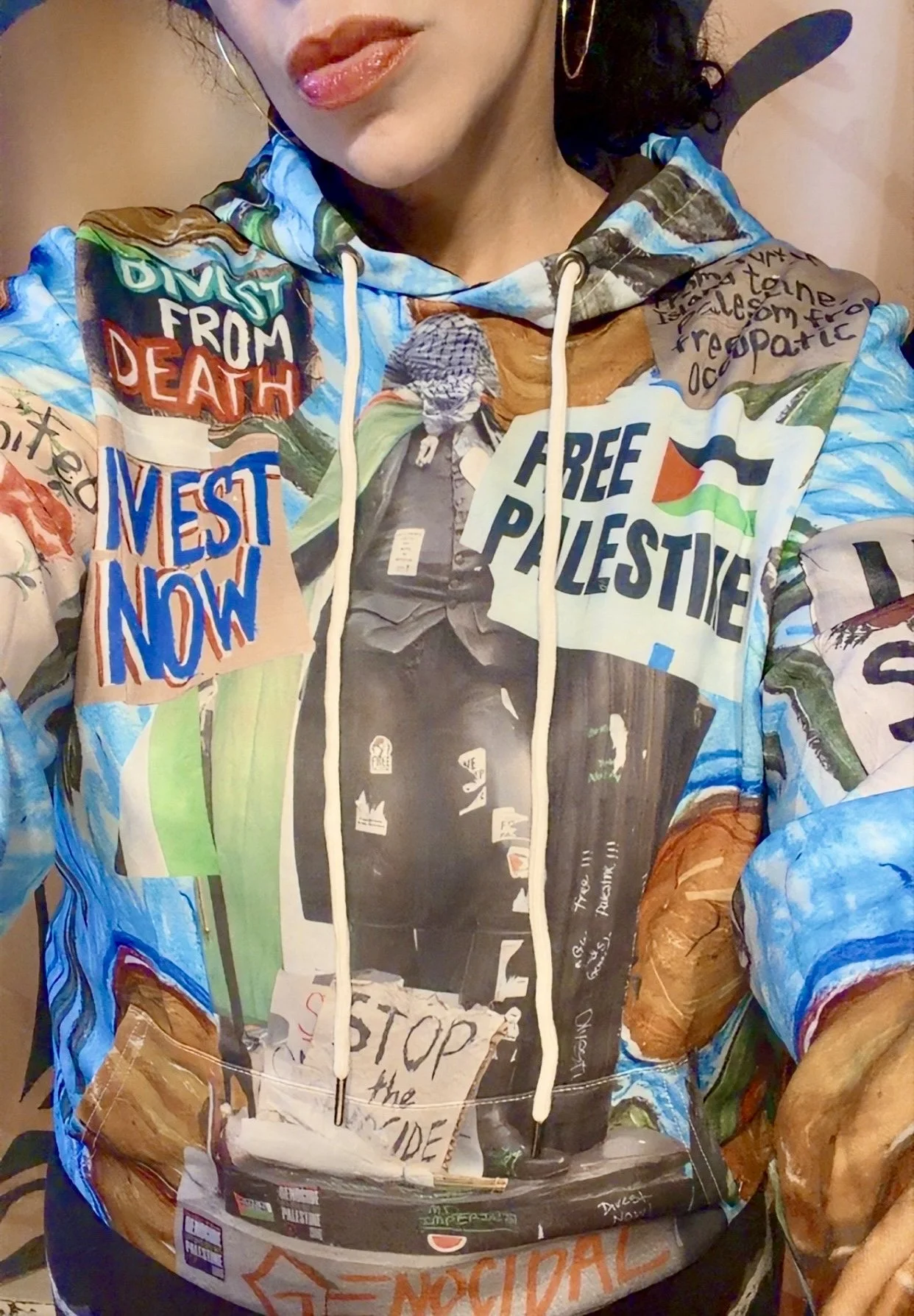
The garment enters the world as wearable testimony (for Counterwear), mobile archive (carrying memory, history, resistance), direct aid pathway (every QR scan a potential donation), and conversation catalyst (the work invites questions, explanations, engagement.
When someone purchases and wears a Counterwear piece, they are not buying fashion. they are entering a relationship with a family, becoming part of a living archive, and participating in material resistance.
For Imaginal Nature: garments circulate as ecological and mythopoetic embodiments carrying attention to non human intelligence and environmental witness into daily life.
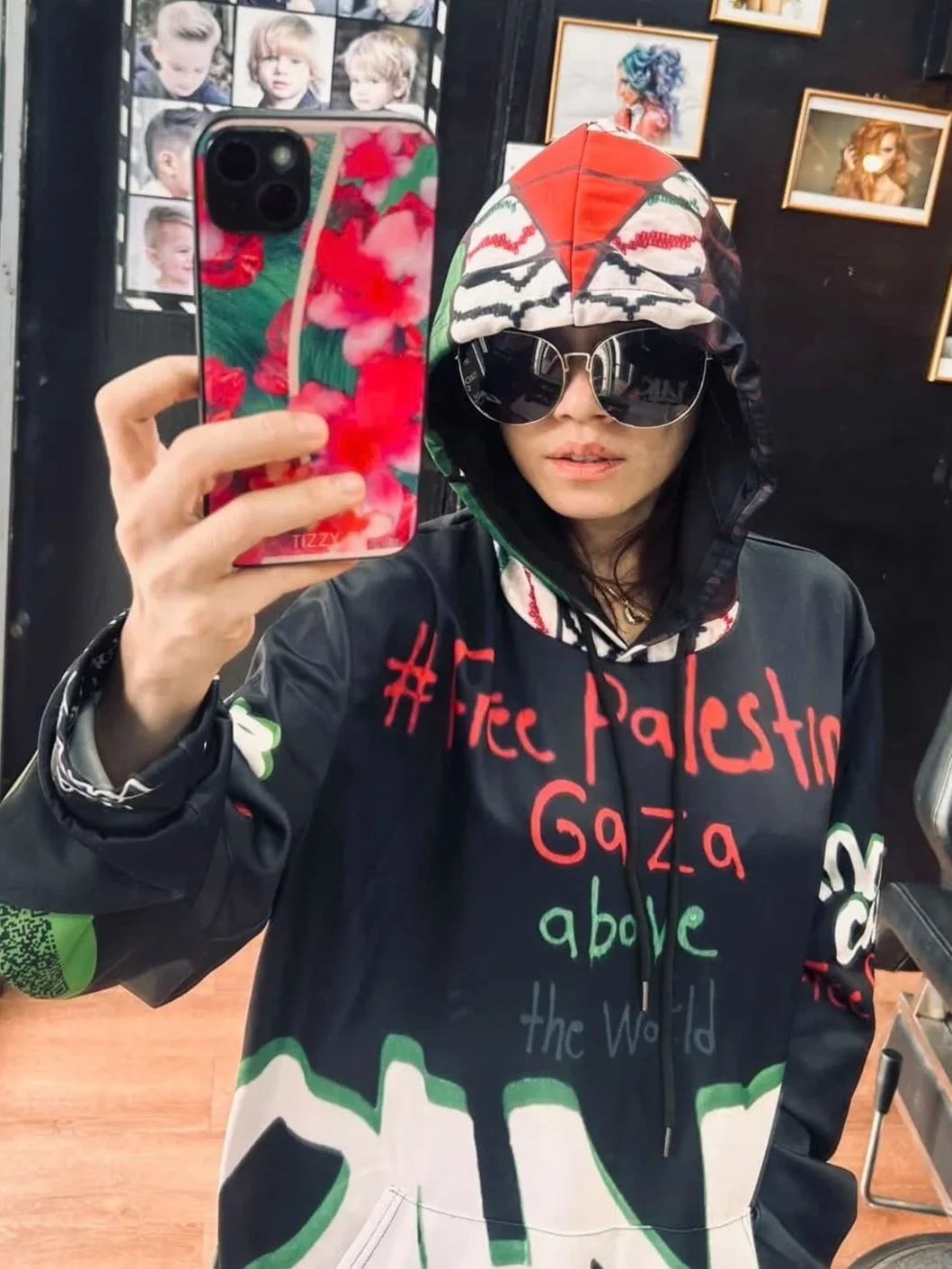
8. recursive documentation
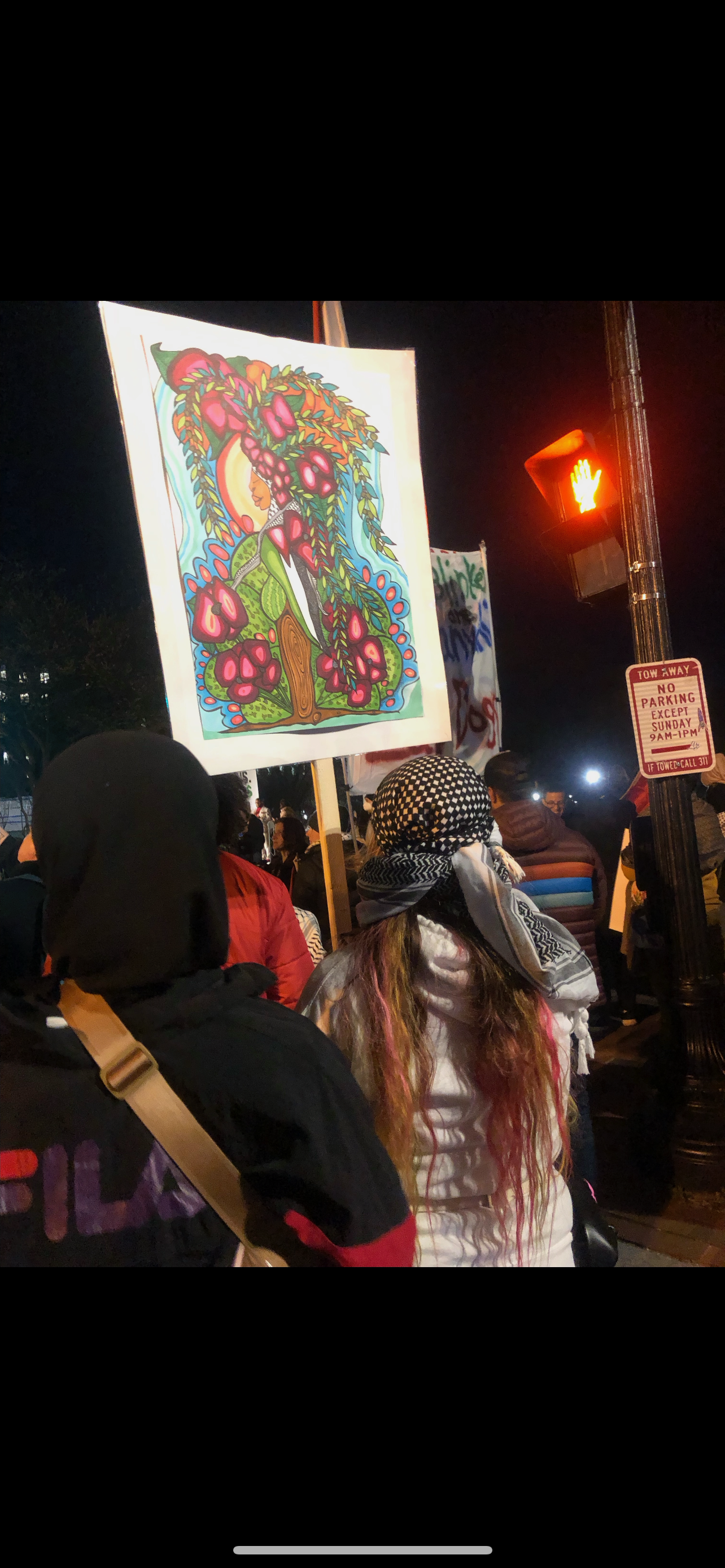
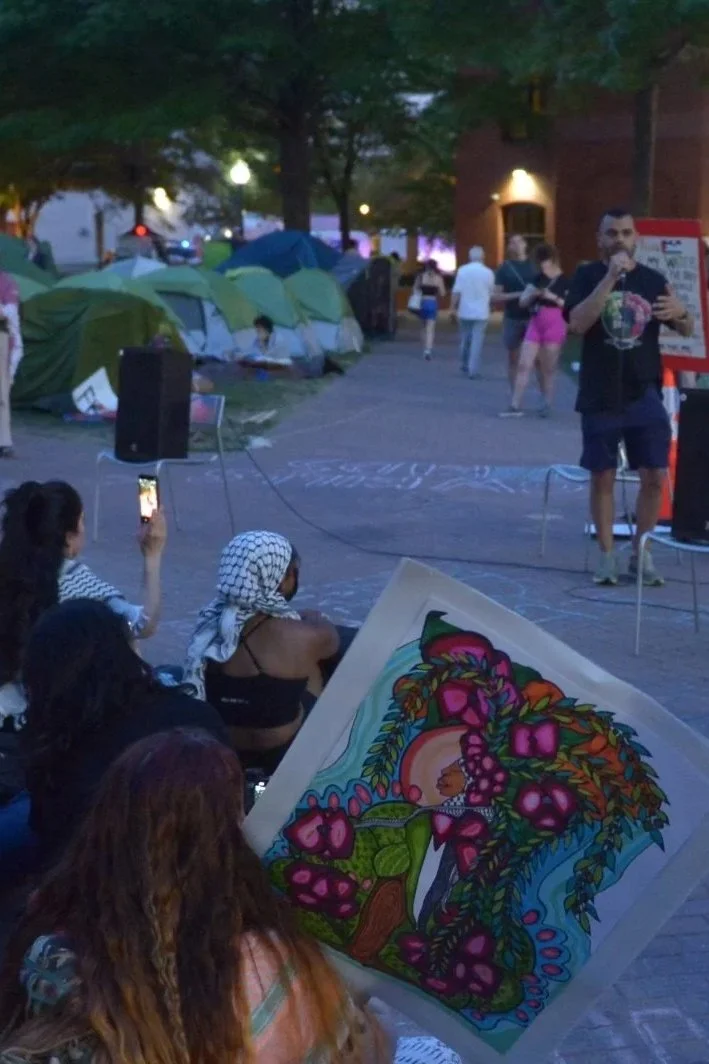
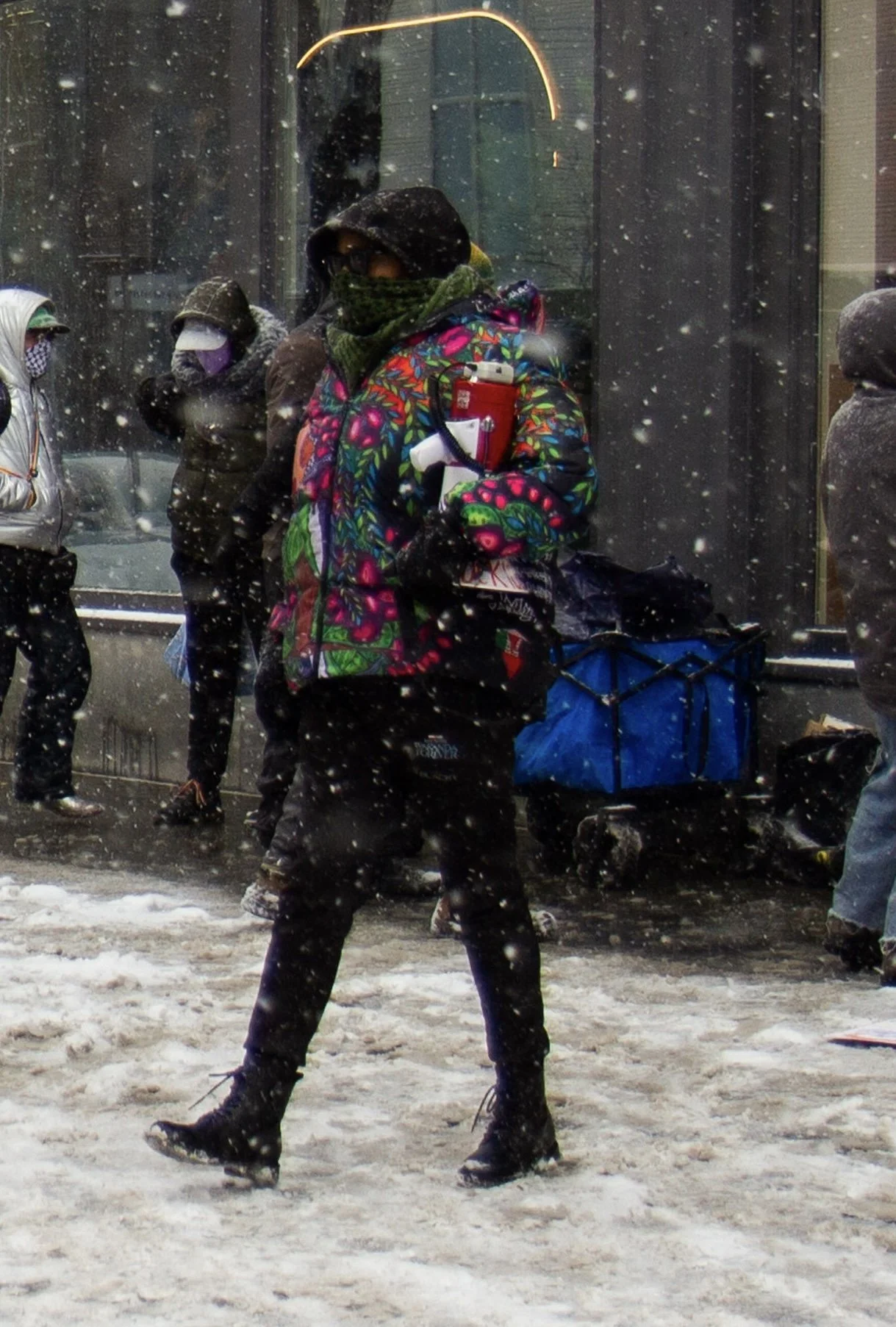
As garments circulate, they may be photographed again, worn at protests, in daily life, in new contexts. These image create temporal layers. the work accumulates history.
This is not required, but when it happens organically, it deepens the archive. A photograph of someone wearing your work at a protest becomes part of the testimonial record. It can be digitized again, potentially translated into new textile forms, generating further iterations.
The methodology loops. Each cycle adds depth without erasing origin.
Try a class—on us
It all begins with an idea. Maybe you want to launch a business. Maybe you want to turn a hobby into something more. Or maybe you have a creative project to share with the world. Whatever it is, the way you tell your story online can make all the difference.